Description
A to-do list scrawled on three sticky notes and a phone app is not a system. This is: one master list where every task lives, a weekly planner that gives the tasks a home, a daily page that puts the top 3 first, and a habit tracker that keeps the small promises counted too. Type it in the spreadsheet and let the counters do the arithmetic — or print the pages and run the whole thing with a pen.
The spreadsheet — 5 tabs (Excel and Google Sheets):
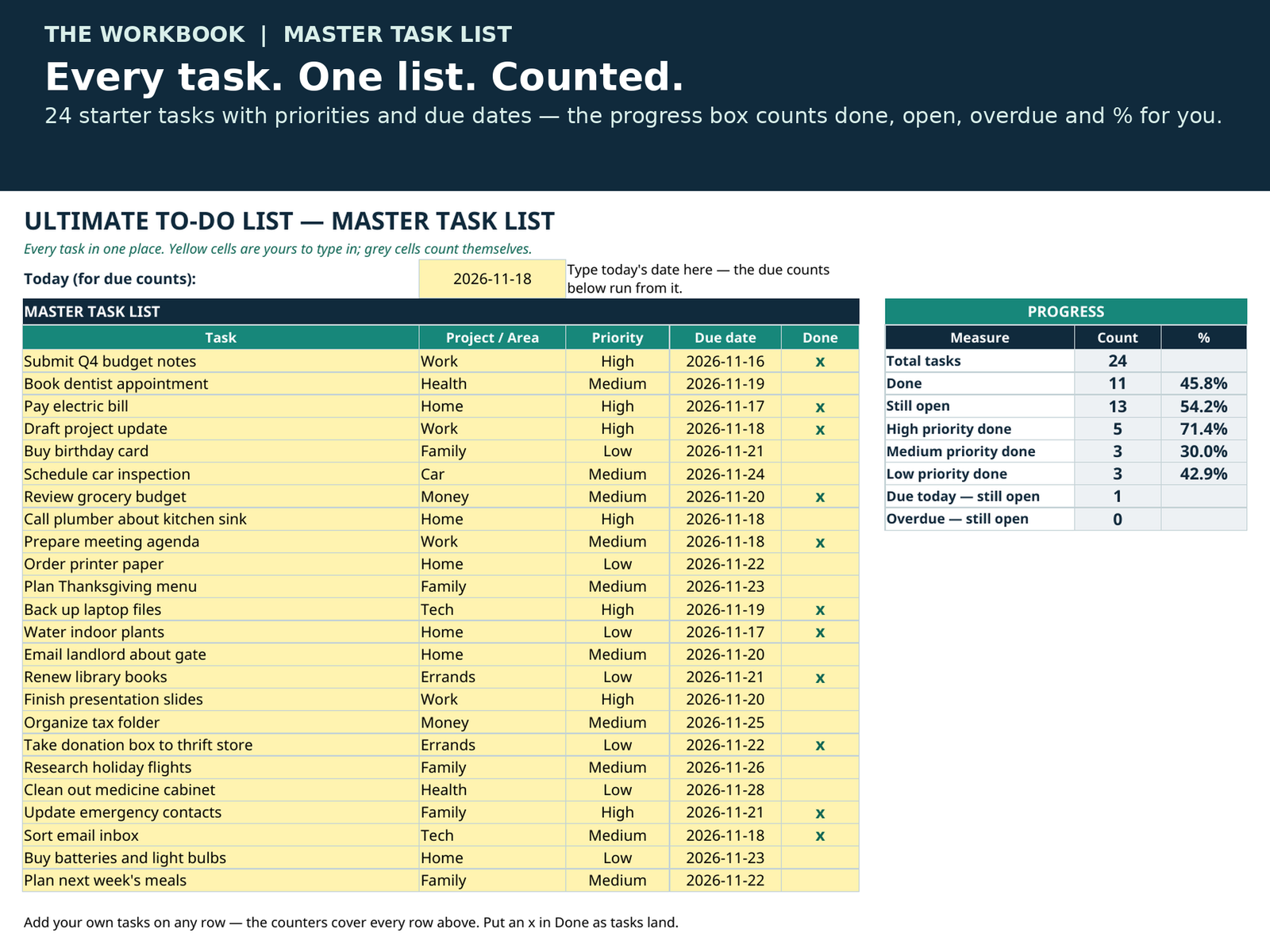
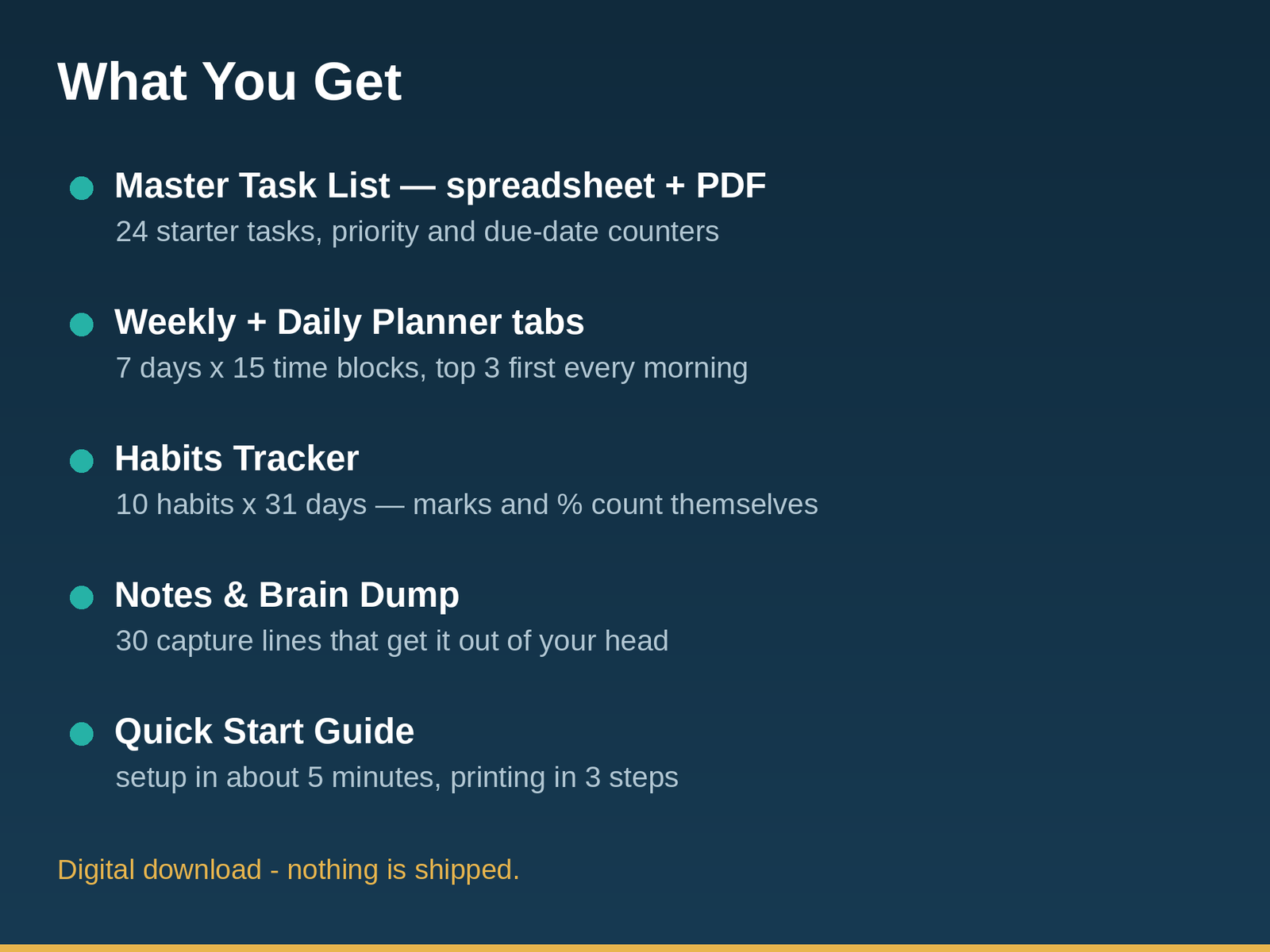
• Master Task List — 24 starter tasks with project/area, priority and due date columns ready to edit. Type today’s date once and the progress box counts total tasks, done, still open, done-by-priority (High, Medium, Low), overall percent, due-today-still-open and overdue — no TODAY() tricks, so it recalculates the same everywhere.
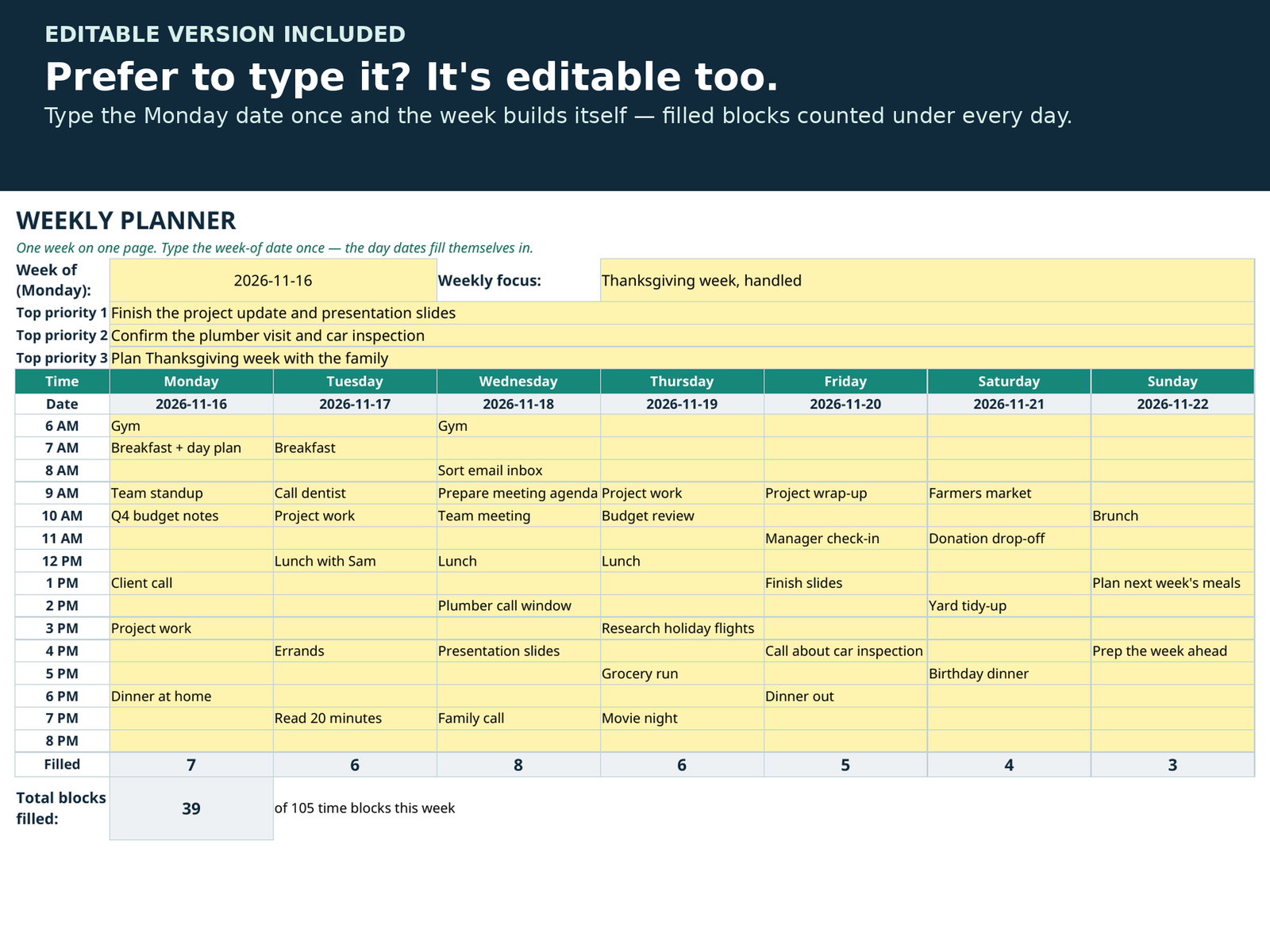
• Weekly Planner — type the Monday date and all seven day dates fill in. Fifteen time blocks a day (6 AM to 8 PM), three weekly priorities at the top, and a filled-block counter under every day.
• Daily Planner — the day on one page: a Top 3 priorities block with its own done counter, a 15-block schedule with notes, a 10-item daily checklist with a percent-done counter, and notes for tomorrow.
• Habits Tracker — 10 starter habits across 31 days. An x is all it takes: Marks and % count themselves against the days tracked so far, which you update as the month goes on, plus a per-day totals row across the bottom.
• Notes & Brain Dump — 30 ruled capture lines sorted by area (Work, Home, Family, Money, Health, Later) with a captured-notes counter, so stray thoughts have a home that is not your head.
The example is a real-shaped week, not a fantasy. The filled EXAMPLE workbook is one ordinary busy week in November 2026: 24 tasks on the master list, 11 done (46%) — including 5 of the 7 High priority tasks. On the typed Wednesday, 4 tasks were due that day, just 1 was still open, and none were overdue. The weekly planner holds 39 filled time blocks (Wednesday is fullest, with 8), the daily page shows 2 of its top 3 done and 6 of 10 checklist items ticked, and the habit tracker stands at 115 marks over 18 tracked days (64%), led by Make the Bed at 17 of 18. Eight brain-dump notes are already captured. Every number is worked out by the formulas from the tabs themselves, so you can watch the whole system agree before you type a thing.
The printable — 4 pages:
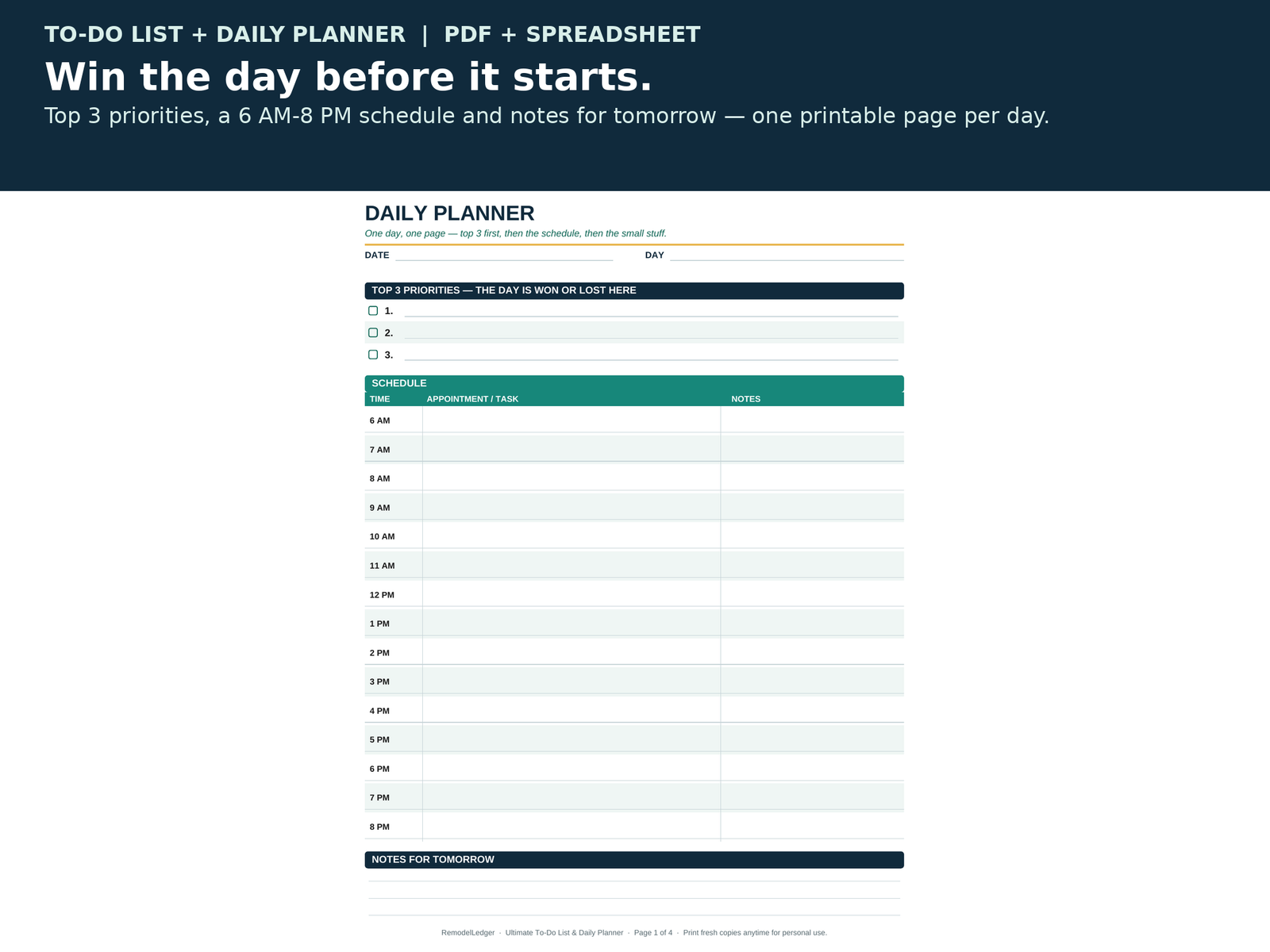
• Page 1: the daily page — date and day lines, Top 3 priorities with checkboxes, the full 6 AM–8 PM schedule, and notes for tomorrow.
• Page 2: the weekly spread — week-of and focus lines, three top priorities, seven days across twelve time blocks, and a brain-dump strip along the bottom.
• Page 3: the master list — all 24 starter tasks with Done boxes, area, priority and due columns, plus four blank rows of your own.
• Page 4: the habit tracker — the 10 starter habits plus two write-your-own rows across all 31 days, a % column, notes and brain-dump lines, and a weekly-wins block.
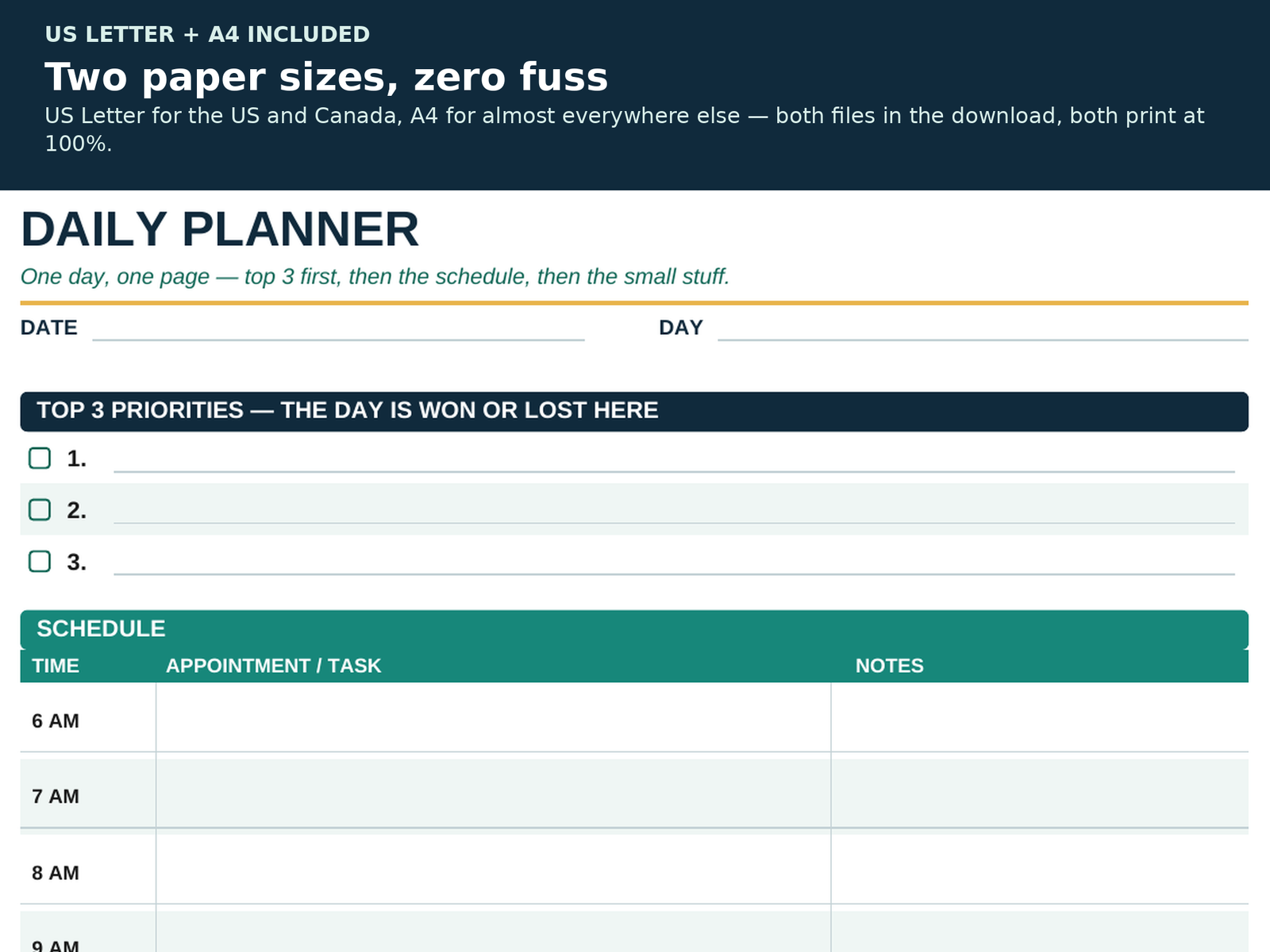
• Same content in US Letter and A4.
You receive 5 files:
1. The planner, BLANK (Excel .xlsx) — all 5 tabs, ready for your week.
2. The planner, EXAMPLE (Excel .xlsx) — the filled-in November week described above.
3. The printables, US Letter (PDF, 4 pages) — for US and Canada.
4. The printables, A4 (PDF, 4 pages) — for almost everywhere else.
5. A Quick Start Guide (PDF, 2 pages) — setup in about 5 minutes, printing notes, and the rest of the shelf.
Good to know:
• Print at 100% (Actual size). The margins are already built in, so no fiddling with printer settings.
• Pale yellow cells are yours to type in; grey cells are formulas — they count for you, so don’t type over them.
• Every counter runs from dates you type yourself (today’s date, the week-of Monday, days tracked so far) — nothing depends on the file guessing what day it is.
• Delete the rows and habits that are not yours; the counters adjust themselves.
• Print as many copies as you need for your own household — the daily page is made to be printed fresh.
• Instant download — files are available as soon as you check out. Nothing is shipped.
Getting organized, at home and away — the rest of the shelf:
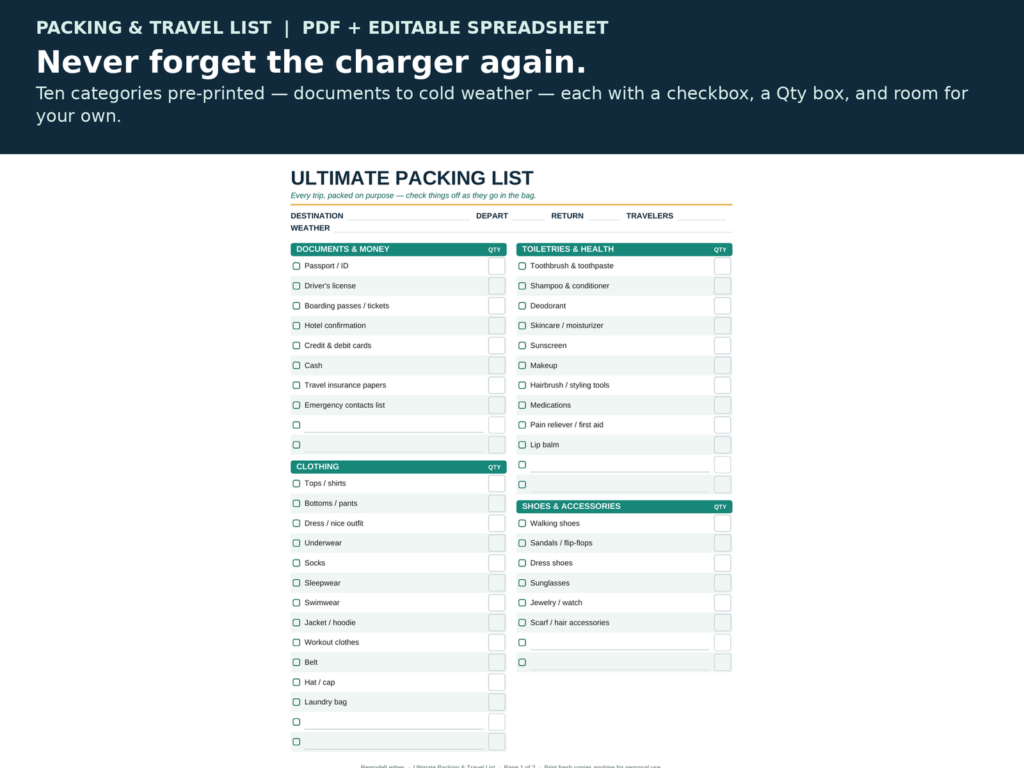
• The trip version of all this: the Packing & Travel List ($4.99) — ten packing categories and a trip-details spreadsheet that counts your progress.
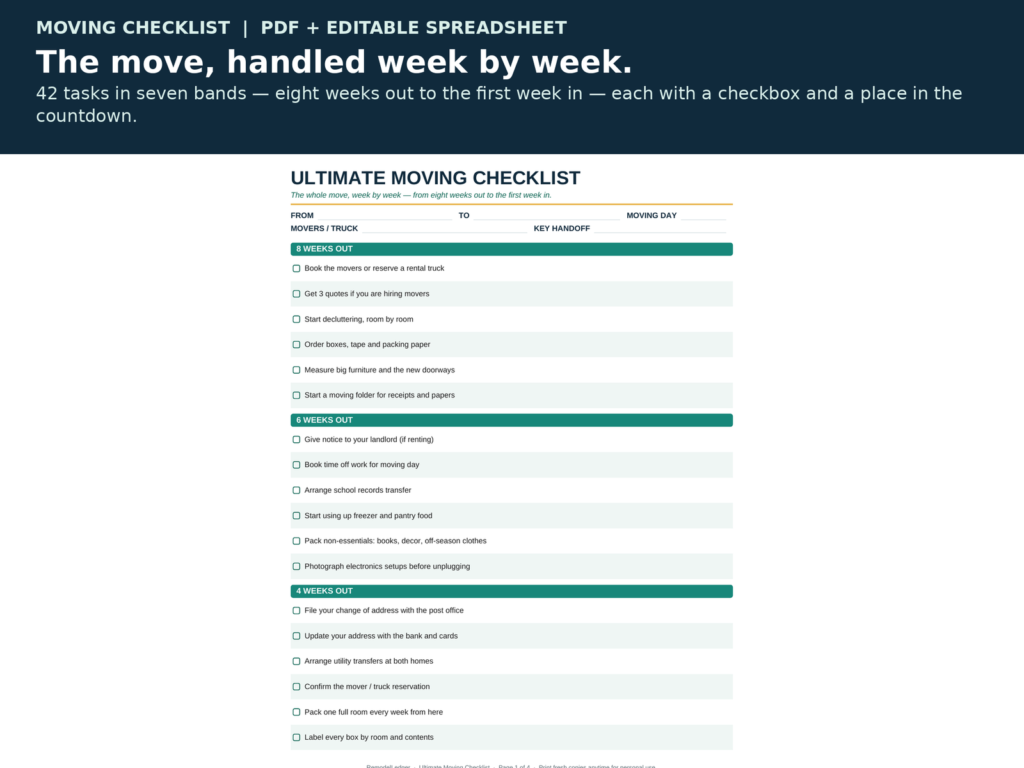
• The move, counted down: the Moving Checklist ($5.99) — 42 tasks in seven week-by-week bands, a packing tracker, change of address and utilities.
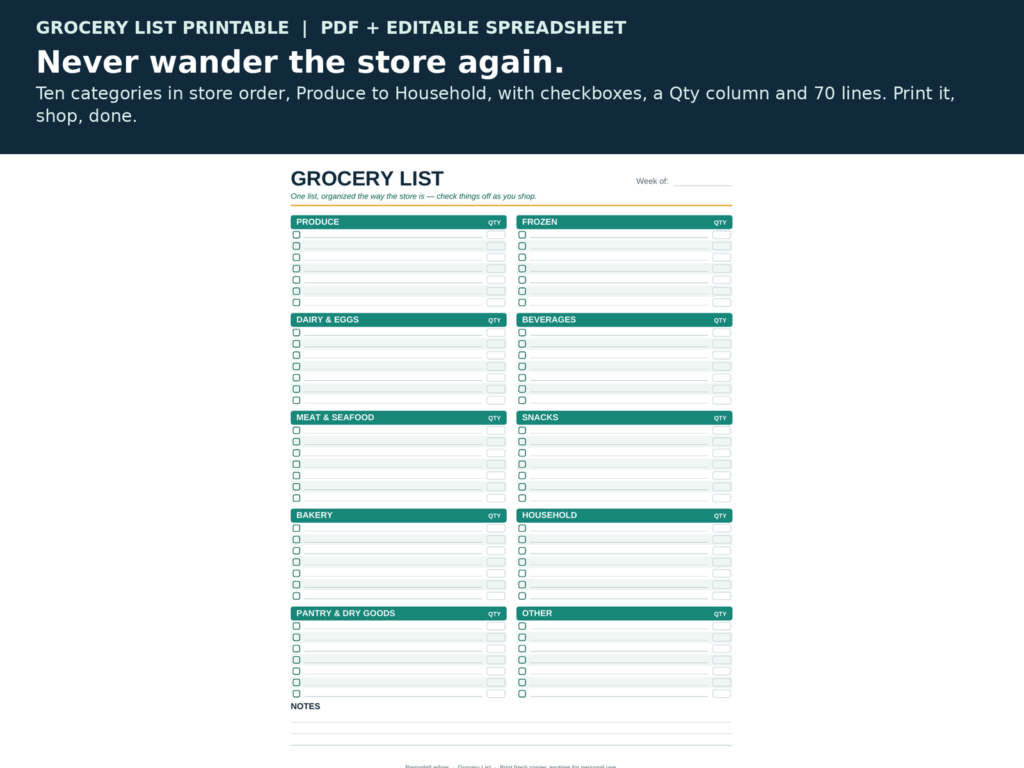
• The weekly shop, handled: the Grocery List Printable ($4.99) — ten aisle categories, a meal planner, and a staples checklist.
• Every book, remembered: the Reading Log & Book Tracker ($9.99) — a reading log, TBR list, and annual challenge, plus printable bookmarks and bookplates.
• The deep cleans, on a rhythm: the Deep Cleaning & Home Care Schedule ($12.99) — 56 tasks room by room, with a supply tracker.
• The clear-out companion: the Declutter & Organization Planner ($12.99) — room-by-room decluttering with a 30-day challenge.
• What you own, catalogued: the Home Inventory ($14.99) — every room and value, for insurance and sanity.
• The move itself, run hour by hour: the Moving Planner ($12.99) — moving-day schedules, room labels and the command-center plan.
About how this was made: This product was designed with the help of AI tools, then carefully reviewed, formula-tested, proofread, and print-tested in both paper sizes before listing — the same standard as every RemodelLedger product.


Reviews
There are no reviews yet.